
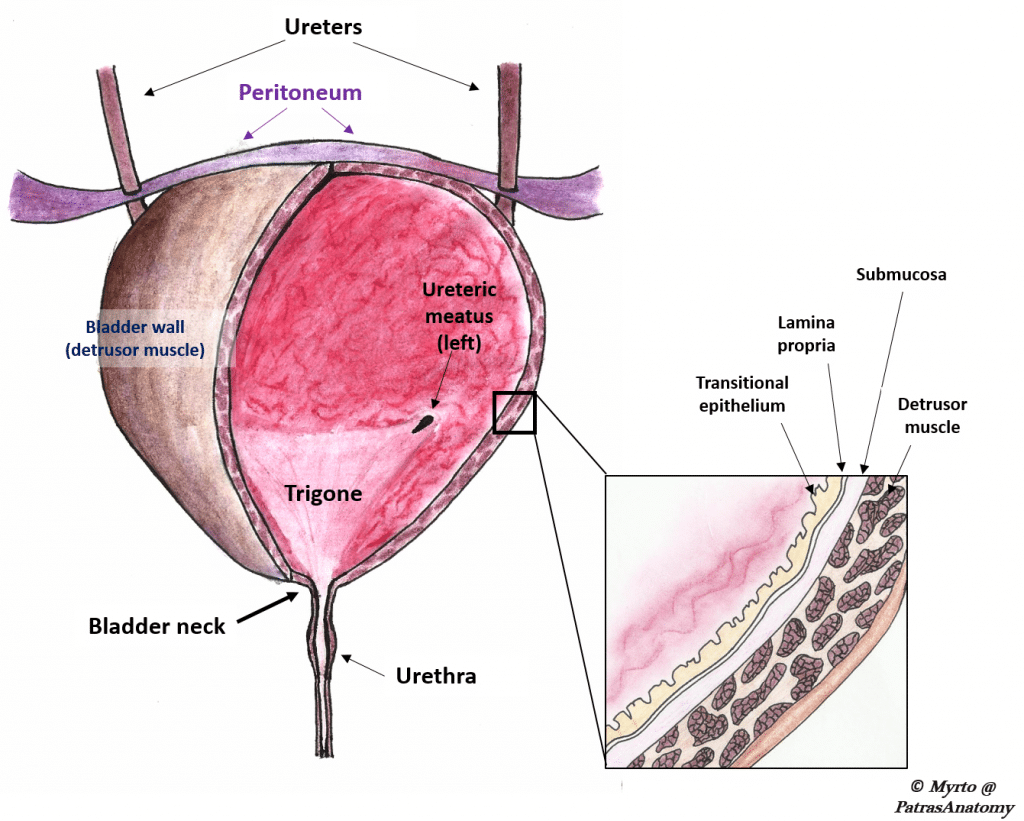

About Bladder Cancer
Bladder cancer begins when cells in the urinary bladder start to grow uncontrollably. The bladder is a hollow, muscular organ in your lower pelvis that stores urine before it leaves your body.
Types of Bladder Cancer
- Urothelial Carcinoma (Transitional Cell Carcinoma): The most common type, starting in the urothelial cells that line the inside of the bladder.
- Squamous Cell Carcinoma: Associated with chronic irritation of the bladder (e.g., from long term catheter use or certain parasitic infections).
- Adenocarcinoma: A rare type that begins in the cells that make up mucus-secreting glands in the bladder.
Risk Factors
- Smoking: The single greatest risk factor. Smokers are at least three times more likely to get bladder cancer than non-smokers.
- Chemical Exposure: Exposure to certain chemicals used in dyes, rubber, leather, textiles, and paint industries.
- Age and Gender: More common in older adults and men.
- Chronic Bladder Inflammation: Frequent urinary infections, kidney stones, or long-term catheter use.
- Previous Cancer Treatments: Certain chemotherapy drugs or radiation therapy to the pelvis.
Symptoms
- Blood in the urine (hematuria): The most common sign. The urine may look rusty, dark red, or the blood might only be visible under a microscope.
- Frequent urination.
- Pain or burning during urination.
- Feeling the need to urinate but not being able to pass much urine.
- Lower back pain on one side (if the cancer blocks a ureter).
Treatments
Transurethral Resection of Bladder Tumor (TURBT)
TURBT is often the first procedure performed to diagnose and treat early-stage bladder cancer. It is minimally invasive and requires no incisions.
Benefits of TURBT:
- Provides a definitive diagnosis and staging of the cancer.
- Provides curative treatment for non-muscle-invasive bladder cancer.
- Quick recovery with most patients going home the same or next day.
Robotic Radical Cystectomy
A Robotic Radical Cystectomy is the surgical removal of the entire bladder, typically performed for muscle-invasive bladder cancer or recurrent, high-risk non-muscle-invasive bladder cancer. After removing the bladder, your surgeon must create a new way for your body to store and pass urine (Urinary Diversion).
Types of Urinary Diversion:
- Ileal Conduit: The surgeon uses a small piece of your intestine to create a tube that drains urine into a bag worn on your abdomen.
- Neobladder: The surgeon uses a piece of intestine to create a new pouch (a "new bladder") inside your pelvis, allowing you to urinate naturally.
- Indiana Pouch: A pouch is created inside your body from a piece of intestine, but you must insert a catheter into a small opening on your abdomen to empty it.
What are the benefits of Robotic over Open Surgery?
- Significantly less blood loss and reduced need for blood transfusions.
- A shorter hospital stay and faster return of bowel function.
- Faster overall recovery and return to daily activities.
- Less pain and smaller incisions, leading to better cosmetic results.