
About Testicular Cancer
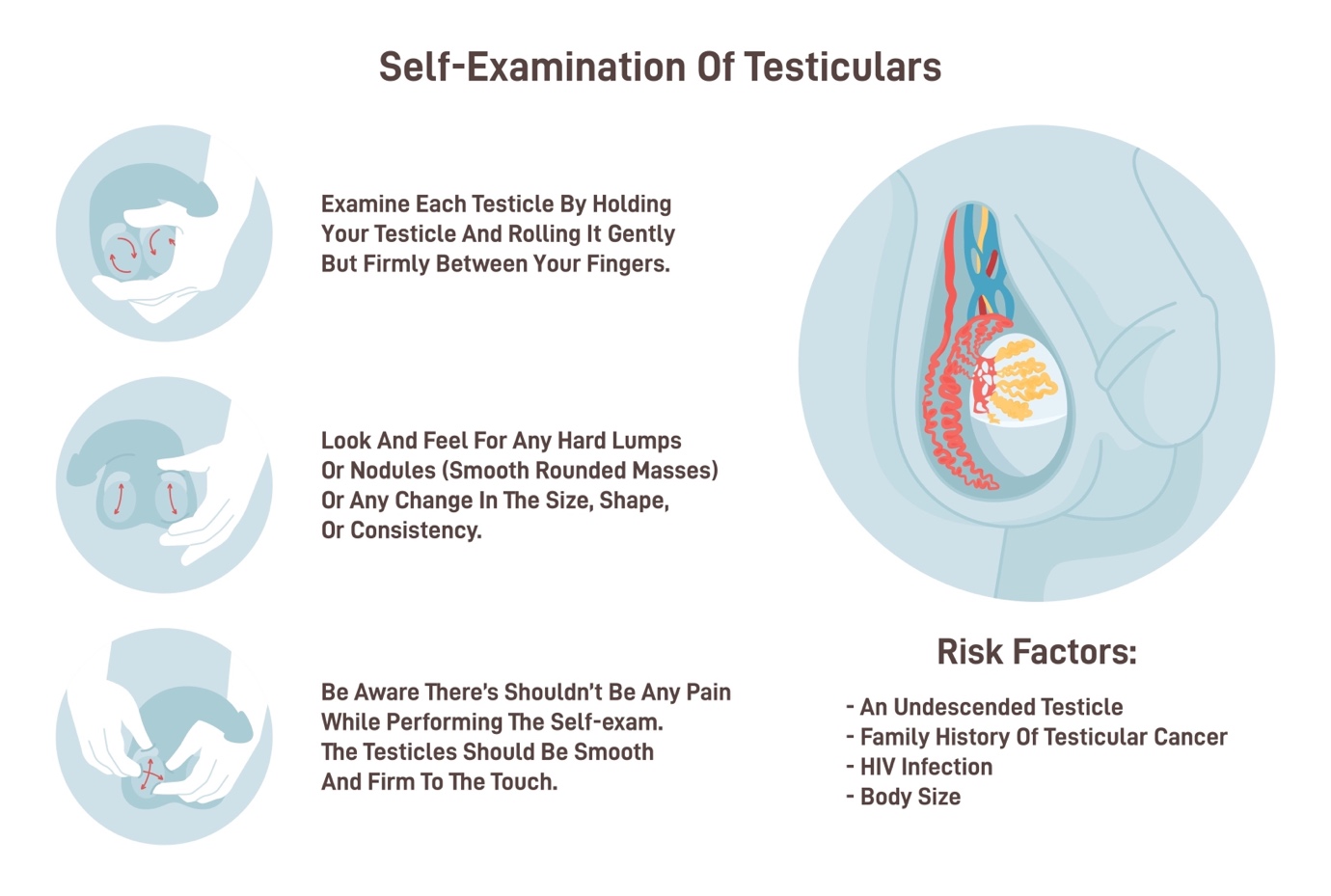
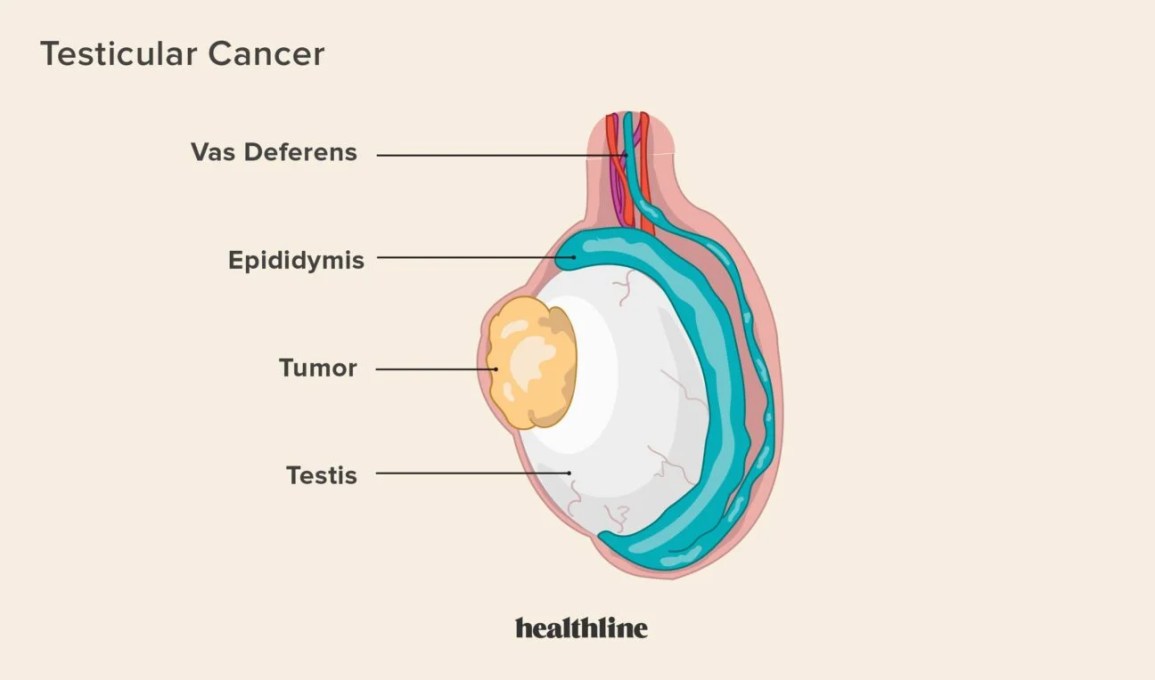
Testicular cancer occurs in the testicles (testes), which are located inside the scrotum, a loose bag of skin underneath the penis. The testicles produce male sex hormones and sperm for reproduction. Testicular cancer is highly treatable, even when cancer has spread beyond the testicle.
Risk Factors
- Undescended testicle (Cryptorchidism): The most significant risk factor. Risk remains elevated even if surgically corrected during childhood.
- Family history: A history of testicular cancer in a father or brother increases risk.
- Age: It disproportionately affects younger men, most common in men between the ages of 15 and 45.
- Abnormal testicular development: Conditions like Klinefelter syndrome may increase risk.
Symptoms
- A lump or enlargement in either testicle. This is the most common symptom and is usually painless.
- A feeling of heaviness in the scrotum.
- A dull ache in the abdomen or groin.
- A sudden collection of fluid in the scrotum.
- Back pain (if cancer has spread to lymph nodes in the back of the abdomen).
Treatments
High Inguinal Orchidectomy
A Radical Inguinal Orchiectomy is the primary surgery for almost all stages of testicular cancer. It involves the complete removal of the affected testicle and its attached spermatic cord through a small incision in the groin (inguinal area).
The spermatic cord contains blood vessels and lymph channels that can act as pathways for the cancer to spread. By removing the testicle and the cord up to the internal inguinal ring, we minimize the risk of spreading cancer cells during the operation. Simply cutting into the scrotum (like a typical biopsy) is avoided, as this could alter lymphatic drainage and spread the cancer to unusual locations.
Robotic Retroperitoneal Lymph Node Dissection (RPLND)
The testicles drain their lymphatic fluid to lymph nodes located deep in the back of the abdomen (retroperitoneum), around the main blood vessels (aorta and vena cava). If testicular cancer spreads, these nodes are usually the first place it goes. An RPLND is a complex surgery to remove these lymph nodes. A Robotic RPLND uses advanced surgical technology to perform this operation through a few small "keyhole" incisions.
What are the benefits of Robotic over Open RPLND?
- Avoids the massive midline abdominal incision extending from the breastbone down to the pelvis.
- Significantly less postoperative pain.
- Shorter hospital stay (2–4 days vs. 5–7 days).
- Magnified 3D vision helps in delicately peeling lymph nodes off the aorta and preserving tiny nerves critical for ejaculation.
- Faster recovery and return to normal activity.